Home » Blog » Category: Career Development

Announcement: Brand Camp University adds Adjunct Lecturers: @KellyLux & @Riddick3point0

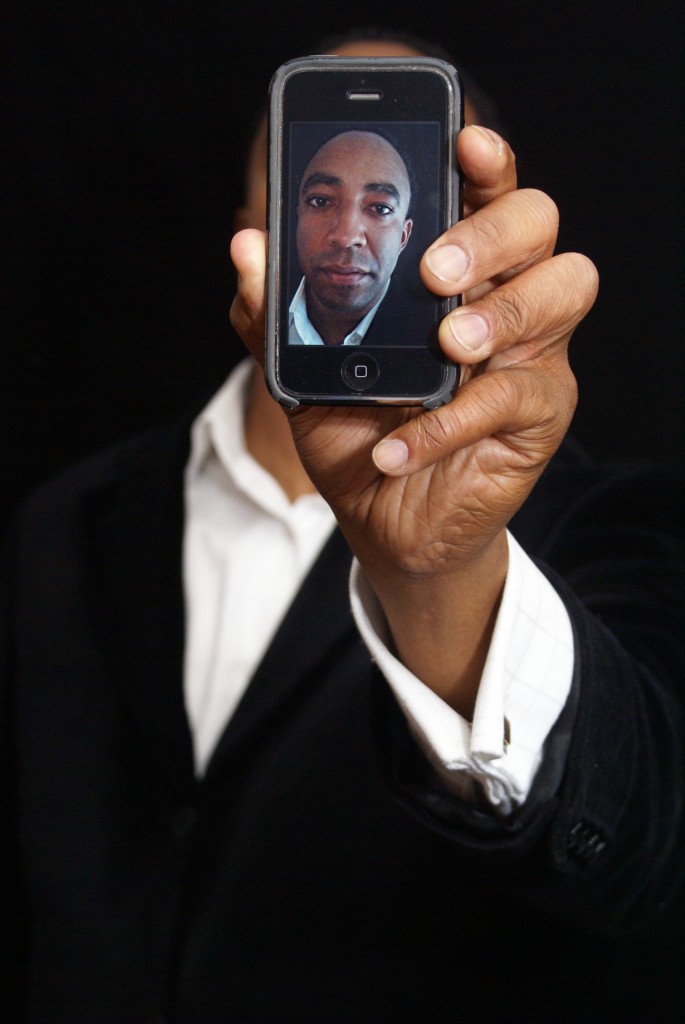
Today Brand Camp University is excited to announce the addition of two new Adjunct Lecturers (Bloggers): Kelly Lux and Lawrence Riddick. They bring a great deal of knowledge and incite from their career experience and we are very happy that they have decided to share content on BrandCampU.com. They will be posting content that is career, social media, and personal branding related. For more information about Kelly and Lawrence her bio have been included below.

Kelly Lux – School of Information Studies (iSchool) at Syracuse University as Social Media Manager

I recently joined the School of Information Studies (iSchool) at Syracuse University as Social Media Manager. My duties entail designing strategies for the social media efforts of the Syracuse iSchool and Syracuse University. I manage SM accounts on a variety of platforms and engage with a set of diverse populations, while building community and brand awareness.

We are forging partnerships with a variety of social media companies in order to build and expand Syracuse University’s presence in this space. It is our intention to make SU the leader in social media among our peers.

I lead a team of graduate and undergraduate students on a variety of social media projects designed to enhance the social media experience of prospective and current students, alumni, potential donors, employers, researchers, educators and the community.

At the iSchool I am a member of the iComm Team which is responsible for internal & external print, social and web communications content and design.

Most recently, I worked in Career Services at SU managing the Mentor @ SU program, making connections between students & alumni for networking, using social media, one on one meetings and workshops to deliver career advice, and planning and hosting networking events across the country.

For more information follow Kelly at: @KellyLux

Lawrence Riddick – Principal at Clarity Consulting & Design

Lawrence is a dynamic marketing professional with over 8 years of experience in helping brands and ideas emerge and evolve. He has working experience in marketing, design, project management, publishing, and writing.
Most recently while at Experience Marketing as an Experience Director, Lawrence helped his team execute and activate hundreds of sponsored events on behalf of General Motors. Prior to Experience Marketing he worked as a project manager in the branded content publishing division of Campbell-Ewald Advertising on publications such Corvette Quarterly and OnStar Magazine.
Lawrence started his career with an entrepreneurial effort as owner of an agency, The Riddick Group, that serviced small to mid-size businesses with marketing communication solutions. In addition to creating marketing plans and ad campaigns for clients, he expressed his design and writing abilities, as publisher of a branded publication for the apparel company DAVERSE in Detroit, MI.

He is currently consulting individuals and small organizations at Clarity Consulting and Design on marketing, branding, and content creation in the web 2.0 space.

For more information follow Lawrence at: @Riddick3point0

How Portable is your Personal Brand?

How portable is your personal brand? You are responsible to manage your career.  The portability of your personal brand is going to become more important and more of an asset as the workplace changes and we become more hyper-connected.  Let’s first define the meaning of a portable personal brand.

Definition

Portable Personal Brand: It is the ability to take your online personal brand assets with you when you move from company-to-company, change careers, change positions, or transition to being an entrepreneur.  Essentially the digital characteristics and assets of your personal brand move wherever you go.

Why is this important?  The number of times a person changes careers is about 5-7 from the research that I have done.  The Bureau of Labor Statistics (BLS) doesn’t provide data on career changes but on the number of jobs a person holds in his/her lifetime (which is 10.8 jobs from ages 18 to 42.) So it is not a matter of if but when you are going to change careers and/or change companies. It is critical that you keep your personal brand portable.

Tips for Portability of your Personal Brand

  • Personal Branded Social URLs: Always maintain separate personal branded accounts.  Your personal social network account URLs should not be tied to the company accounts as the only accounts you have or manage.  When you leave a company your accounts should come with you no questions asked, but this can only happen if you own the accounts.  In an ideal world you want to bring your pre-existing accounts with you to your place of employment if they are relevant.

  • Own Your Network: If the contacts in your network are housed only in the social network there is an inherent risk if your account gets comprised or the terms of service changes.  Your network will become more of an asset in the workplace, not necessarily because of numbers but become of influence.  Create your own personal database from your social network contacts, you need to own your contact list.  Download and import your contacts into a personal list that you own and manage (Note:  If you are tweeting from company accounts legally you don’t own the contact list. Everyone knows there is a difference between contact names and relationships.)
  • Set-up Linkedin Profiles Properly: Set up your Linkedin accounts with your own personal email address (i.e. Gmail account).  There have been situations where people have been locked out of their accounts because the account was set-up with a corporate email address.
  • Own Your Hub (Don’t just rent): Every professional should own the online hub of their personal brand (the online destination/dotcom.)  Make sure your dot com isn’t linked to your current job (i.e. www.HajjFlemingsNike.com.)

Case Study:  Frank Eliason v. Comcast Cares

The new poster child of portable personal branding is Frank Elisaon who most of us have known online as @Comcastcares.  Frank recently changed companies and is no longer the Comcast Cares guy, like LeBron he has decided to take his talents elsewhere (Note:  There was no TV special and Frank left on good terms with Comcast from what I can tell).

Franks former Twitter handle @ComcastCares is obviously not portable and will be maintained by Comcast. Let’s be clear both Comcast and Frank have mutually benefited from the work that was done.  Has Frank lost the total value of his personal brand or the work he has done?  Absolutely not!  There are something’s he will have to start from scratch on and build awareness of his new portable personal brand. If you look at the web location on his Twitter account it is linked to: www.frankeliason.com. Also you can follow Frank on Twitter at @FrankEliason to date he has about 1,700 followers.

@ComcastCares

@FrankEliason

Benefits

One of the major benefits of having a portable personal brand that it can create a unique opportunity for a portable career.  What do I mean by a portable career?  Portable careers are job situations that don’t depend on location with flexible work environments that allow you to do your job remotely for the most part.  With the development of technology:  Skype, WI-FI, and other technologies that allow you to work remotely these types of opportunities are starting to increase.  Portable careers will grow in popularity in the future as work changes.  The forerunner to this is alternative work arrangements which companies have become more comfortable with as a way to provide a benefit to the company and cut cost when they can’t pay an employee more money.

When is this critical?  Portability of your personal brand will come into play the most when you are executing a career change or moving to a new employer.

How Portable is your Personal Brand?

3-Personal Branding Types: Builders, Grustlers, & Leapers

Personal brands operate in one of three worlds: Builders, Grustlers, or Leapers. Now let’s break down the three types, as you read through the descriptions identify which one you are. As a backdrop the workplace is changing, emerging technology is impacting the way we live and communicate, and globalization is shifting when, where and how we work.

Builders (Intrapreneurs) – A builder is a worker that is wired to work in an existing corporate or company structure. Organized working structures typically have regular pay periods, access to company resources, and systems/processes in place that allows people to work in a structured environment. This type of individual enjoys working for someone else and building someone else’s dreams while developing themselves and their personal brand. Most universities and colleges teach students to auto-follow this mentality regardless of how a person is wired because it has been the safe option historically. The biggest benefits of this category are the halo effect and company resources.

Benefits of Builders

  • Halo Effect – Working for a large corporation can position you for great opportunities that are a direct result of your association with the company you work for.
  • Company Resources – The resources that are available at a large corporation can be very beneficial to your career: experience using enterprise software, databases, cool projects and access to priority data.
  • Expanded Network – Great network building opportunities: attending conferences, company networking events, and the visibility to higher-level executives.

Examples: Jeremiah Owyang

Grustlers (Hybrids) GRUSTLE is the combination of a daily Grind (job) and a Hustle (your passion). In my book ‘The Brand YU Life’ the first degree (or principle) is ‘Identify Your Passion’ which is the cornerstone of Grustlin’.

Definitions

Grind: A grind is a job; employment; typically your primary source of income.

Hustle: A hustle is your passion, what you would love to do full-time and what gives you the most satisfaction. It is what you typically do after you work your daily grind.

Your career/job is the primary source of income that you use to seed your passion. This is a minimal risk option that allows you to develop and grow your ideas without the pressure or financial weight of doing it full-time. This personal brand type tends to operate as more of a transitional phase for people shifting from being a builder to a leaper. There are various forms of Grustle: (1) Being a college student and establishing a blog or having a 9-to-5 job and starting a business on the side are two examples.

Benefits of Grustlers

  • Future Job Security – Operating in a grustle is a new form of job security. Depending upon a single employer or a single career to be your financial source for your entire career is more risky than ever before.
  • Additional Financial Stream – Grustling allows you to add an additional financial revenue stream in your area of passion.
  • Career Transition – It is a career strategy to enable you to transition into a new career that doesn’t mesh with your past work history or educational background.
  • Practice over Theory – It allows you to demonstrate your capabilities in the real world versus claiming expertise in theory. It goes beyond what you learned in the classroom.

Examples: Gary Vaynerchuk

Leapers (Entrepreneurs) – Pure entrepreneurship doesn’t appear typically to be innate because it is talked out of us as a child by parents and teachers. In college we are brainwashed to think of ourselves as builders only. It is only after years of making someone else rich, being downsized, outsourced, or fired that we are forced to follow our passion. Some do arrive here after working for someone else and having a great work experience.

Benefits of Leapers

  • You own the results – The risk and reward is greater but you own the results the fruits of your labor.
  • Lifestyle Management – Leapers have the most impact on their work environment whether it is a home office, co-working, coffee shops, or cubicles.
  • Leaders of Innovation – Small enterprises with less bureaucracy are typically the innovative companies which are lead by visionary leapers.

Examples: Kevin Carroll, Mark Zuckerberg

Note: It is possible to be a hybrid of each type as you transition from one phase to another.

People will tell you that you need to work on your own. That is not necessarily true. You have to identify how you are wired. The pressure of being financially responsible for a company is a hugh undertaking your timing and developing must be right. Being true to where you are is the key. There are great success stories in each category.

How you manage your online personal brand should be dictated by the type of personal brand that you are and the stage of your career that you are in.

Demographics

  • Baby boomers (1946-1964) – This group was born during the automotive manufacturing age in the United States and they worked for someone else. If they went to college they were taught to be loyal to their employer. Category: Builders
  • Gen Y (1965-1976) – This group started our careers in the end of the automotive manufacturing boom but were still taught to go to school and work and be loyal to your employer. Category: Builders
  • Millennials (1977-1994) – Economy tanks. They are born grustlers. This hyperconnected group is blogging, multi-tasking and developing online businesses. Category: Grustlers

Identify your personal branding type: Builder, Grustler, or Leaper. The Leaper lifestyle is glorified because it can be a great rag to riches story, or one that changes the world like Microsoft (Bill Gates) or Facebook (Mark Zuckerberg). It can be a recipe of disaster if you are not wired for it.

Personal Branding vs. Career Branding

Noted web strategist Jeremiah Owyang recently posted this article debating the merits of “personal branding” and “career branding”.  Understandably, Owyang is a proponent of building a career brand, as he has utilized this method for more than a decade.  Let’s explore the differences between personal branding and career branding, and determine which path is right for you.

The definitions in quotes are directly from Owyang.  I largely agree with his descriptions, except for the notion that personal brands must be quite so “me-centric”.

Silhouette

Personal Branding

“The first approach is called a ‘personal’ brand, which focuses on that of the individual.  The ‘personal’ brand focuses on the individual, essentially focusing on ‘me’.  While there’s nothing wrong with that, it is fundamentally a different mindset from the second type.” (J.O.)

1.  Fewer Restrictions. As a “lone wolf”, you operate not as a mouthpiece for your employer, but as your own entity.  By distancing yourself from the accompanying restrictions, you are free to operate autonomously.

2.  Consistency. If you switch jobs, get laid off, or your employer disappears overnight – your brand is largely unaffected.  In today’s tumultuous economy, this factor may be more important than ever before.

3.  Freedom to Change. As an independent operator, you aren’t tied to any one product or subject.  If your passion suddenly flips unexpectedly, your personal brand can do the same.

Career Branding

“The second type of approach is what I call a ‘career brand’.  The difference is simple.  This is a brand that’s focused on “what can you do for your clients or employer”, with a focus more on ‘we’. (J.O.)

1.  Halo Effect. As a career brander, your individual brand is boosted by the reputation of your employer as well.  If you work for Google or Apple, you receive an immediate lift in brand authority (deserved or not).  Note that this also works both ways, and can have negative consequences.

2.  Efficiency. A career brand can be powerfully efficient, as your day job can fuel both your current and future career prospects.  No need to exhaust yourself with duplicate efforts, working separately from your 9-to-5 (as is often the case for a personal brand).

3.  Employer Benefit. While building your career brand, an interesting thing happens – you benefit, your company prospers as a byproduct, and your network enjoys the ride too.  Triple win!  An individual brand ideally serves to help others, and this aspect plays a huge role in allowing that to occur.

In some cases, employees will not have the authority to choose their path. Public affiliation with your employer may be censored, or your outward communication may automatically be considered “property” of the employer.

But, given the choice, which would you opt for: personal branding or career branding?

Ryan Rancatore discusses the latest topics and trends related to building a brand at Personal Branding 101.  Connect with Ryan on Twitter at @RyanRancatore, or on Linkedin.

Photo credit, zedbee.

7 Ways to Increase Your Job Security

There is a lot of advice and information out there on branding yourself for the job search; however, personal branding isn’t just a one-time activity.  Personal branding is an ongoing process that can not only help you advance your career once you get an opportunity, but also help you to keep your job in tough economic times.

Here are 7 tips on how personal branding can help you increase your job security at work:

Demonstrate to your boss that you get it. Make it known that you know what needs to get done and are doing it and a lot more. Today job security is about company security. Any employer feeling on the financial ropes looks for ways to lighten the load. All too often, that means reductions in force, or simply put, layoffs. The people aren’t casualties are those who bring real value to the enterprise. Smart employees brand themselves by making it clear to the leadership that they understand the harsh realities of business and aren’t afraid. They demonstrate that by identifying problems and fixing them, by seeing opportunities and seizing them, and by being a strong voice that motivates positive action. If you’re a whiner and naysayer, you’re toast! If you’re a “I’m with you no matter what,” can-doer, you’re golden. - Dawn Lennon, ConsultBigPicture.com

Be mindful of who you need to be influencing. In many cases, it may not be just your immediate boss or even people in the same office or country. Be very clear about who makes the decisions about your role and department and that they are aware of the contribution you are making. - Paul Copcutt, SquarePegSolution.com

Find an internal champion who can speak knowledgeably about your contributions. A mentor is the best person to serve in this capacity. If you have a mentor who is well placed in the organization, this person is in an excellent position to speak up for you. Very often employees are let go because upper management does not know that they are very valuable. Having an internal champion to speak for you can go a long way in terms of persuading management that you are too valuable to lose. Some organizations have formal mentoring programs in place. If your organization does have such a program, make sure that you take advantage of it. If they don’t look around to see who might fill this role for you. - Cheryl Palmer, CallToCareer.com

Go the extra mile in your role. While you’re building your external brand, you also need to build your brand within your company. If everyone knows you, and knows that you add value to your team through contributions, industry knowledge and industry research, you’ll become more difficult to get rid of. - Erik Vermeulen, ErikVermeulen.com

Go above and beyond your role by getting involved. The more involved and active you can become in the company, the more entrenched and indispensable you become.  This could be joining a cross-functional committee, writing for the company blog, sharing/contributing ideas, expertise or opportunities to other functions and teams within the organization, offering to start, lead or coordinate company-wide initiatives and more.  This will showcase your value and talents, but also your loyalty and commitment to the company’s long-term success. And who wouldn’t want someone with those assets on the team? - Chris Perry, CareerRocketeer.com

Become the Subject Matter Expert (SME) in your area of expertise! When you are the SME for your area, it is very difficult for a company to let you go unless you are an extremely difficult person to work with, or the company completely changes direction whereby eliminating your functional expertise. However, in addition to becoming a SME in just your area, having a strong foundation of understanding about the overall business of your company and picking your spots strategically for where you add sound judgment and advice in a respectful, thoughtful and positive manner, could also help you stave off being let go involuntarily. - David Kimmelman, GetTheJob.com

Cross-train so that you can backfill a position, if necessary.  In an era of cutbacks, you make yourself more valuable if you are flexible and can do more than one job. If your company does not formally cross train its employees, volunteer to be cross trained. - Cheryl Palmer, CallToCareer.com

Special thanks to everyone who contributed to this wealth of personal branding insight!

Chris Perry, MBA is a Gen Y brand and marketing “generator,” a career search and personal branding expert and the founder of Career Rocketeer and Launchpad.